The world’s become a little duller today

image source
image source

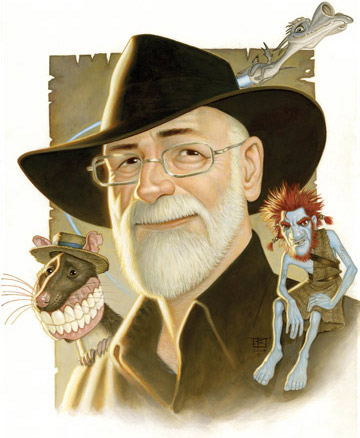
Terry Pratchett, Discworld series author, dies aged 66 | Books | The Guardian.

I don’t remember my first Pratchett book, but it didn’t take me long to accumulate pretty much the entire collection.

Like every book nerd, I’ve kept a quotes file that grew over time with tiny bits of text I liked. It shouldn’t be a surprise that a wordsmith like him should figure prominently in it. Here’s one, from Guards! Guards!

It was amazing, this mystic business. You tell them a lie, and then when you don’t need it any more you tell them another lie and tell them they’re progressing along the road to wisdom. Then instead of laughing they follow you even more, hoping that at the heart of all the lies they’ll find the truth. And bit by bit they accept the unacceptable.

And here’s a neat bit of Pratchett trivia: when he was knighted, he forged his own sword, infused with bits of meteorite.

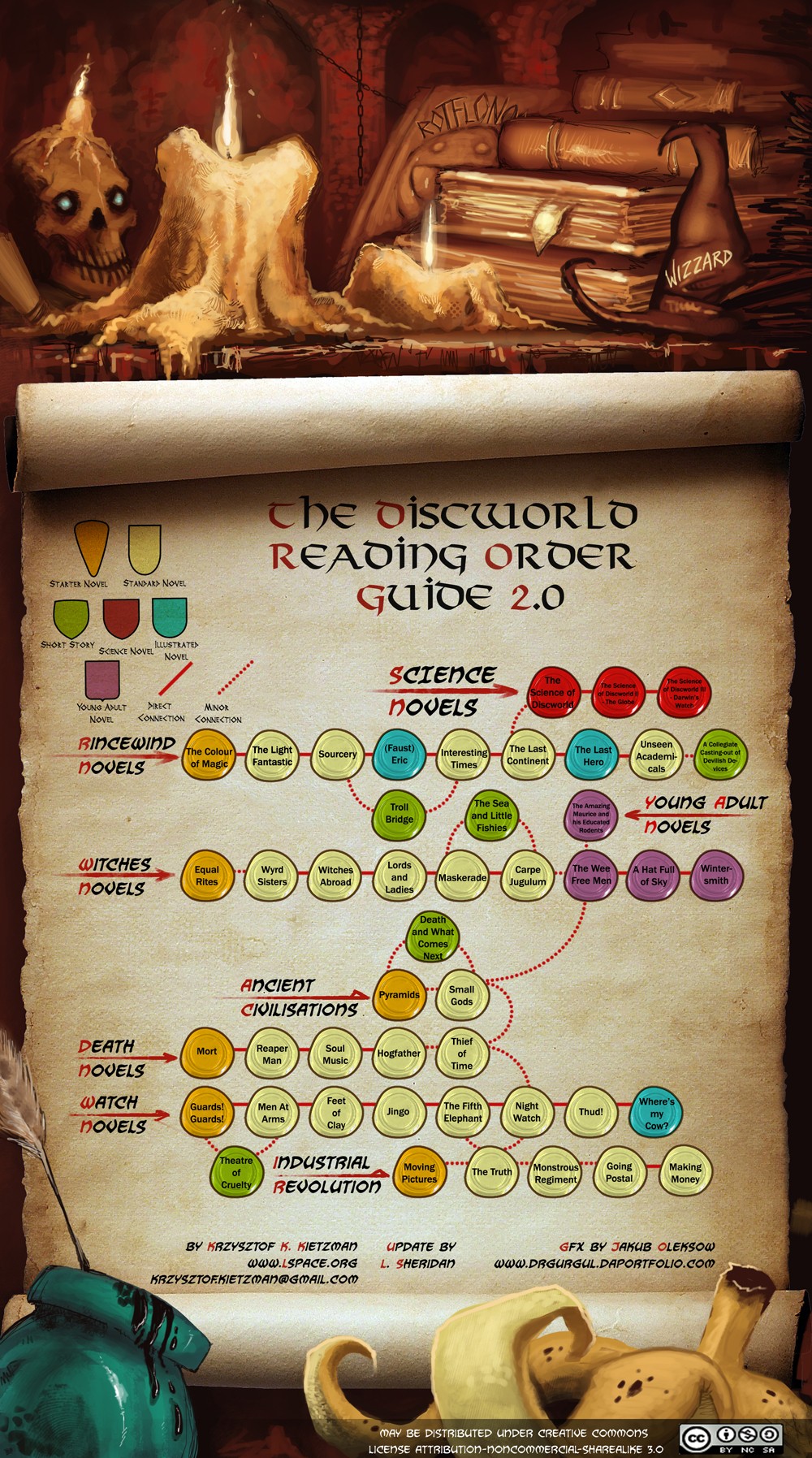
I’m re-reading some old favourites again (starting with Jingo, and moving on to the other Watch novels). Here’s a good reading guide for those getting started.
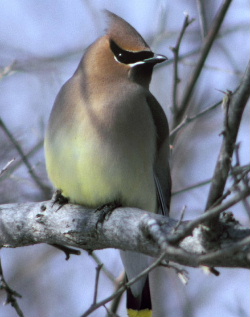
Melancholy

image credit
image credit

Suddenly for no earthly reason I felt immensely sorry for him and longed to say something real, something with wings and a heart, but the birds I wanted settled on my shoulders and head only later when I was alone and not in need of words.

― Vladimir Nabokov, The Real Life of Sebastian Knight

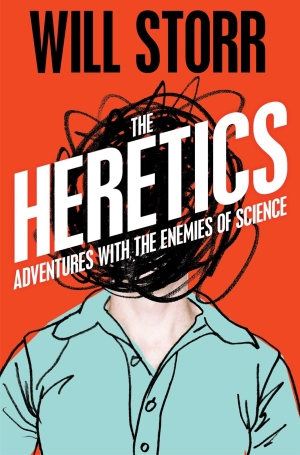
Heretics

image source: http://www.panmacmillan.com.au/display_title.asp?ISBN=9780330535861&Author=Storr,%20Will

I’ve decided to stop playing games and pick up books again. My daughter is 10 months old and is imitating everything I do, and I want her to stop patting my 3DS and pick up a book instead. My unread pile isn’t very huge, but didn’t look too appealing. So I made a quick trip to my favourite bookstore and picked up a few new books. Richard Dawkins’ autobiography was one of them. Heretics, by Will Storr, was another. I’m less than a 100 pages in but already liked it enough to write about it.

Heretics is a kinder book than the ones I’m used to. Storr tours the world, meeting people with.. odd beliefs, from creationists to UFO nuts. Anyone who (like me) has spent hours arguing with friends and family on skepticism, the placebo effect, rationality and so on, will notice how stubborn and defensive people can get when pushed to a corner. The facts don’t matter to them, and perversely, make them less inclined to change their minds. It’s not often you see a mind changed when faced with convincing data.

An excerpt stood out, early in the book:

I consider — as everyone surely does — that my opinions are the correct ones. And yet, I have never met anyone whose every single thought I agreed with. When you take these two positions together, they become a way of saying, ‘Nobody is as right about as many things as me.’ And that cannot be true. Because to accept that would be to confer upon myself a Godlike status. It would mean that I possess a superpower: a clarity of thought that is unique among humans. Okay, fine. So I accept that I am wrong about things — I must be wrong about them. A lot of them. But when I look back over my shoulder and I double-check what I think about religion and politics and science and all the rest of it… well, I know that I am right about that… and that… and that and that and — it is usually at this point that I start to feel strange. I know that I am not right about everything and yet I am simultaneously convinced that I am. I believe these two things completely, and yet they are in catastrophic logical opposition of each other.

The book goes on to explore why otherwise intelligent people delude themselves into believing things that are so obviously not true to the rest of us. Well worth a read (so far). As a plus, the book is also a lot funnier than I expected, and there’s more than one laugh-out-loud moment when Storr undergoes some excruciating ritual or the other to get into the minds of these people.

Tagore on critics

The manner in which literary analysis is engaged with in our country is completely uneducated. There’s no point in hearing: ‘I liked it’ or ‘I didn’t like it’. That only gives you a particular person’s opinion; it doesn’t give you the truth of that opinion. If that opinion comes from somebody who is sufficiently capable of appreciation or experienced in literary affairs then even that might make you think a little. But just any person’s opinion has no value at all. Our country lacks good reviewing skills—and the primary reason is that the people of our country do not have an intimate acquaintance with literature.

Pale Fire Review

I bought this at a used book store a few weeks back. It is a worn down, old edition from the 1960’s. This is my third Nabokov book, and ever since my first, I seem to have lost interest in the ‘normal’ fiction books I used to read. There is a cadence to his choice of words that shines through in all his works.

The story is told by Charles Kinbote, a hilarious, clueless, nosey neighbour of famous poet John Shade. Shade, dead when the story begins, has been working on a 1000 line poem titled Pale Fire. Kinbote hails from the fictitious land of Zembla, and pesters Shade with stories of its rich history and its last King. He is clearly shattered when he gets his hands on the draft of the poem after Shade’s death, and sees nothing related to this.

Things go crazy from here. Bent on seeing what he wants to see, Kinbote annotates the poem with rambling connections that he draws to his own Zemblan theme. Liberally drawing his own inferences from the rough drafts, the picture that emerges is of a man imposing his delusions on another’s work.

The Unreliable Narrator trope has been done to death in movies already (Rashomon, Fight Club, Memento, American Psycho, The Usual Suspects…), but Nabokov has layered his work with magnitudes more of easter eggs. Saying more would spoil the fun, and I’ve already seen several interpretations online that I missed in my first reading.

I cannot speak for   the poem itself, having very little exposure in that area. The story, however, is Nabokov at his playful, devious best. The liberally cross referenced footnotes make for a rich experience over multiple readings.

Enhanced by Zemanta